
Choose the right excavation company for Full-Service Excavationin Grande Prairie, AB, Canada
A commercial site can look ready on paper and still fail in the ground. Soft soil, poor drainage, buried obstructions, uneven grades, and unstable cuts can delay a project before concrete, steel, or utilities ever arrive.
That is where a skilled excavation company fits into the build. Excavation is more than moving dirt. It is the work that shapes land into a safe, stable, build-ready site.
Dirt Gypsy provides excavation and site preparation services in Grande Prairie, AB, and across Canada for commercial and industrial projects. From clearing and grading to trenching, basement excavation, backfilling, and compaction, the goal is simple: prepare the ground correctly so the next phase of work can move forward with confidence.

What does an excavation company do?
An excavation company prepares land for construction, utility installation, drainage, access, and structural work. The work can include clearing the site, removing unsuitable materials, cutting trenches, digging below-grade areas, shaping elevations, placing backfill, and compacting soil.
For commercial and industrial projects, excavation must match drawings, engineering requirements, safety standards, and the real conditions found on site. A small grading error can affect drainage. A poorly compacted backfill area can settle. A trench cut without proper support can create serious risks.
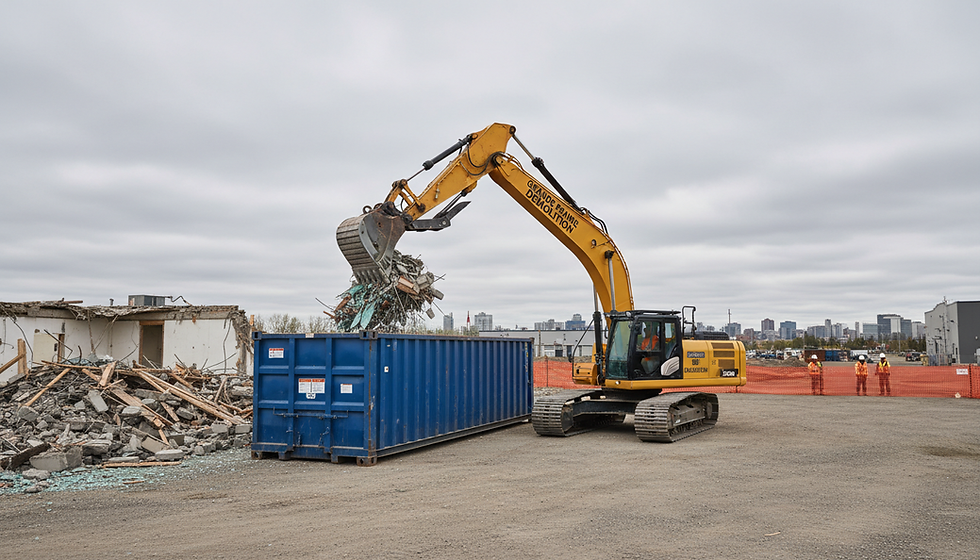
A professional excavation company handles the heavy equipment, sequencing, soil movement, and site controls needed to make the ground usable.
Common excavation work includes:
Site preparation before construction starts
Bulk earthmoving and soil removal
Foundation and structural trenching
Basement excavation for below-grade structures
Rough and fine grading
Utility trenching for water, sewer, electrical, communications, and drainage
Backfilling and compaction after installation work
Land shaping to support drainage and stability
For businesses searching for excavation services, utility trenching, grading and leveling near me, the real need is usually bigger than equipment availability. The right crew must understand access, grades, soil conditions, safety practices, timelines, and how excavation affects every trade that follows.
Dirt Gypsy site preparation services in Grande Prairie and across Canada
Site preparation is the first major step in turning raw land or a disturbed site into a usable construction area. Dirt Gypsy offers site preparation for commercial and industrial projects, including work in Grande Prairie, AB, and service areas across Canada.
Good site preparation creates a clean, stable, well-shaped base for the project. It also reduces avoidable delays caused by unsuitable materials, poor drainage, or uneven access.
Dirt Gypsy site preparation can include the following work.
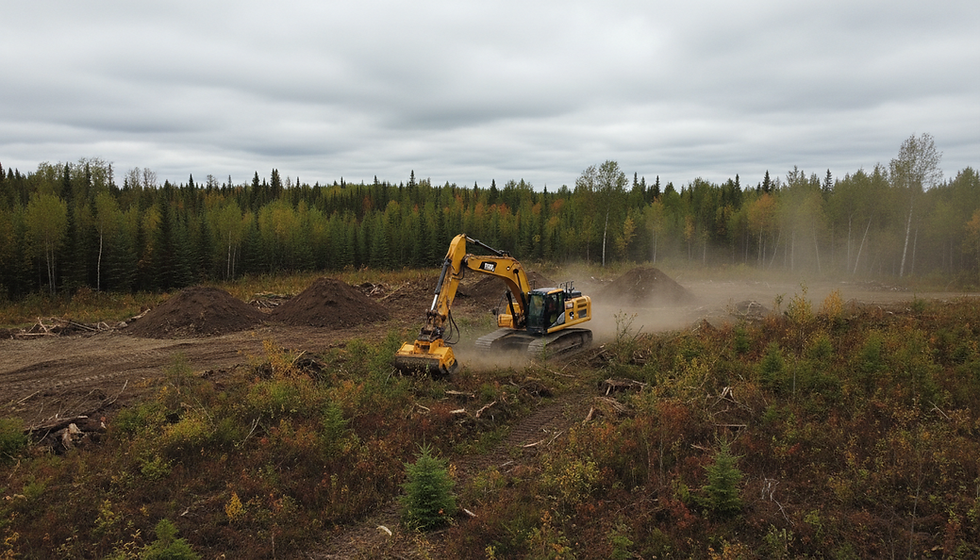
Clearing vegetation, debris, and unsuitable materials
Before grading or trenching can begin, the site often needs to be cleared. That may include brush, roots, stumps, old debris, loose fill, organics, or other materials that should not remain under a building pad, road base, parking lot, or utility corridor.
Unsuitable materials can affect compaction and long-term performance. Removing them early helps the site meet engineering requirements and gives the next phase a proper base.
Stabilizing and shaping the land
Construction sites need controlled grades, stable work areas, and practical access routes. Dirt Gypsy shapes the land so equipment, crews, and materials can move safely and efficiently.
Stabilization may involve cutting high areas, filling low areas, building stable pads, managing slopes, or preparing areas for future compaction.
Ensuring proper drainage and a build-ready foundation
Water is one of the biggest threats to a construction site. If surface water sits where it should not, it can soften soil, delay work, damage subgrade, or create unsafe conditions.
Proper site preparation helps direct water away from critical areas. It supports better foundation performance, safer access, and a cleaner transition into forming, utilities, paving, or structural work.
Earthmoving and trenching support heavy construction
Earthmoving is the controlled movement of soil, clay, gravel, and other ground material to match project design. On commercial and industrial sites, this can involve large volumes of material and tight grade requirements.
Dirt Gypsy offers earthmoving and trenching services that support foundations, utilities, site access, building pads, and other major construction work.
Bulk excavation and soil removal
Bulk excavation removes large quantities of material from a site or moves it to another area where it can be reused. This work may be needed for a building footprint, parking area, loading zone, retention area, industrial yard, or access road.
The work must be planned around haul routes, equipment access, disposal or stockpile areas, soil conditions, and site safety.
Structural trenching for foundations and utilities
Structural trenching creates cuts for foundations, grade beams, footings, utility lines, and other buried systems. These trenches must be dug to the right width, depth, slope, and alignment.
On commercial and industrial projects, trenching often happens around other active work. That means careful coordination matters. Excavation crews must protect the cut, maintain access, and avoid unnecessary disturbance to adjacent areas.
Precision equipment operation for accurate cuts and grades
Accurate excavation saves time later. If a cut is too shallow, crews may need rework. If it is too deep, the area may need engineered correction or additional backfill and compaction.
Precision equipment operation helps achieve clean trench lines, correct depths, stable slopes, and consistent grades. This is especially important when excavation supports structural concrete, underground services, drainage, or paved surfaces.
Basement excavation for commercial and industrial buildings
Basement excavation requires careful control. The work goes below grade, which adds more risk and more technical requirements than many surface excavation tasks.
Dirt Gypsy offers basement excavation for commercial and industrial buildings, with attention to depth accuracy, slope control, soil support, and project specifications.
Below-grade excavation for commercial and industrial buildings
Below-grade excavation may be needed for mechanical rooms, parkades, storage areas, lower-level workspaces, industrial pits, or foundation systems. The excavation must match the design and leave room for forming, waterproofing, drainage, and access.
The crew must also manage soil removal, ramps, safe equipment movement, and the changing conditions that appear as the cut gets deeper.
Proper slope control, depth accuracy, and soil support
A basement excavation is not just a hole in the ground. The side slopes, depth, benching, access points, and soil support must be suitable for the site conditions and the planned structure.
Proper slope control helps reduce collapse risk. Depth accuracy helps avoid costly rework. Soil support helps protect workers, nearby structures, and the integrity of the excavation.
Full compliance with engineering and safety specifications
Commercial and industrial excavation work must follow project drawings, engineering direction, and applicable safety requirements. That includes trench and excavation safety, equipment operation, access management, and work around underground services.
Dirt Gypsy focuses on completing excavation in a way that supports both construction progress and safe site activity.
Grading and leveling create the final shape of the site
Grading and leveling turn a rough excavation area into a controlled surface. This work affects drainage, building pad performance, road base preparation, parking lot function, and long-term site stability.
Dirt Gypsy provides fine and rough grading for commercial and industrial projects.
Fine and rough grading for site layout
Rough grading brings the site close to the required elevations. It often happens after clearing, bulk excavation, or fill placement.
Fine grading brings surfaces closer to final design tolerances. This work supports building pads, gravel bases, concrete preparation, paving areas, and landscaped or drainage zones.
Surface leveling for building pads, parking lots, and roadways
Commercial and industrial sites depend on flat, stable, and properly sloped surfaces. Building pads need a strong base. Parking lots need controlled water runoff. Roadways need consistent support for traffic.
Leveling work helps create those surfaces before the next materials are placed.
Elevation accuracy improves drainage and stability
A site that looks level may still hold water if the elevations are wrong. Accurate grading directs water away from structures and toward approved drainage paths.
That protects the subgrade, reduces erosion risk, and supports long-term performance for buildings, yards, roads, and parking areas.

Utility trenching for water, sewer, electrical, and drainage systems
Utility trenching is one of the most important excavation services on a modern job site. Water, sewer, electrical, communications, stormwater, and drainage systems all depend on correct trench depth, bedding, slope, support, and backfill.
Dirt Gypsy offers utility trenching for commercial and industrial projects, including water, sewer, electrical, and related underground systems.
Water line and sewer system trenching
Water and sewer trenching must follow grade requirements, depth requirements, and code-compliant installation practices. Sewer lines often need accurate slope to function correctly. Water lines need proper cover, bedding, and protection.
A poorly prepared trench can affect pipe performance, create settlement, or cause repairs later.
Electrical and communication conduit trenching
Electrical and communication conduit trenching requires careful alignment and depth control. Trenches must be cut to support safe installation and proper separation from other services.
Clean trenching helps crews install conduit efficiently and reduces the chance of damage during backfilling.
Stormwater and drainage system installation
Stormwater control protects sites from water damage and erosion. Drainage trenching may support culverts, catch basins, storm lines, ditching, swales, or other water-management systems.
Proper trenching helps these systems move water where it needs to go.
Safe trench support and code-compliant practices
Trenches can be dangerous if not handled correctly. Safe excavation practices may include sloping, benching, shielding, controlled access, and attention to changing soil conditions.
Code-compliant installation practices help protect workers, the public, and the long-term function of the underground system.
Backfilling and compaction protect the work after excavation
Excavation is not finished when the digging stops. Once utilities, foundations, or structures are installed, the open areas must be backfilled and compacted properly.
Dirt Gypsy provides backfilling and compaction services to support long-term structural stability and reduce future site problems.
Backfill placement after excavation or utility installation
Backfill must be placed in a controlled way. The type of material, placement method, lift thickness, and site conditions all matter.
Backfilling too quickly or with the wrong material can damage utilities, create weak zones, or cause future settlement.
Soil compaction for long-term structural stability
Compaction increases soil density and helps create a stronger base. This is critical near foundations, slabs, roadways, parking lots, utility trenches, and industrial yards.
Proper compaction supports traffic loads, structures, and surface finishes.
Preventing settling, erosion, and future structural issues
Poor backfill and compaction can lead to uneven surfaces, cracked pavement, water pooling, pipe movement, and foundation-adjacent settlement.
Careful compaction helps prevent these issues before they become expensive repairs.
We offer excavation services across Canada in major cities
Dirt Gypsy is based in Grande Prairie, AB, and offers services across Canada. Project availability can depend on scope, location, schedule, equipment needs, and site requirements, but service reach includes major Canadian cities and industrial regions.
Major cities and service areas include:
Province or territory | Major cities and areas served |
Alberta | Grande Prairie, Calgary, Edmonton, Red Deer, Lethbridge, Medicine Hat, Fort McMurray |
British Columbia | Vancouver, Victoria, Surrey, Burnaby, Richmond, Abbotsford, Kelowna, Kamloops, Nanaimo, Prince George |
Saskatchewan | Saskatoon, Regina, Prince Albert, Moose Jaw |
Manitoba | Winnipeg, Brandon, Steinbach, Thompson |
Ontario | Toronto, Ottawa, Mississauga, Brampton, Hamilton, London, Kitchener, Waterloo, Windsor, Kingston, Barrie, Oshawa, Sudbury, Thunder Bay, Guelph |
Quebec | Montreal, Quebec City, Laval, Gatineau, Longueuil, Sherbrooke, Trois-Rivières, Saguenay |
New Brunswick | Moncton, Saint John, Fredericton |
Nova Scotia | Halifax, Sydney |
Prince Edward Island | Charlottetown, Summerside |
Newfoundland and Labrador | St. John's, Mount Pearl, Corner Brook |
Yukon | Whitehorse |
Northwest Territories | Yellowknife |
Nunavut | Iqaluit |
For commercial and industrial work, national service matters when a project involves remote sites, multi-location construction, energy infrastructure, transportation yards, warehousing, manufacturing facilities, or regional expansion.
What to look for in a commercial excavation company
Choosing an excavation contractor affects schedule, safety, and the finished site. The right fit should bring more than machines.
Look for a company that can support:
Project planning
The crew should understand drawings, elevations, access, sequencing, and site constraints.
Equipment suited to the job
Commercial and industrial sites may need excavators, dozers, loaders, compactors, trucks, and specialized attachments.
Grade and depth accuracy
Accurate excavation reduces rework and helps other trades stay on schedule.
Safety-focused trenching
Trench work must be handled with proper support, access control, and awareness of soil conditions.
Clear communication on site
Excavation work affects utilities, concrete, paving, drainage, and building crews. Communication helps prevent conflicts.
Experience with harsh conditions
Canadian projects can involve frost, wet soil, clay, remote access, snow, and changing ground conditions.

FAQ
What does an excavation company do before construction starts?
An excavation company clears the site, removes poor materials, shapes the land, controls drainage, and prepares the ground for foundations, utilities, roads, parking areas, or industrial use.
Does Dirt Gypsy offer excavation in Grande Prairie, AB?
Yes. Dirt Gypsy provides excavation and site preparation services in Grande Prairie, AB, with services also available across Canada for commercial and industrial projects.
What is the difference between grading and excavation?
Excavation removes or moves earth to create cuts, trenches, foundations, or below-grade areas. Grading shapes the surface to the correct elevations for drainage, stability, roads, pads, and final site layout.
Why is compaction important after backfilling?
Compaction reduces air gaps in the soil and helps prevent settling. It supports foundations, utility trenches, parking lots, roadways, and other surfaces that need long-term stability.
Can excavation companies install utility trenches?
Yes. Excavation companies commonly dig trenches for water, sewer, electrical, communications, stormwater, and drainage systems. The work must follow safe trenching practices and project specifications.

A solid project starts with solid ground
Excavation sets the condition for nearly everything that follows. When clearing, trenching, basement excavation, grading, utility work, backfilling, and compaction are done correctly, the site becomes safer, cleaner, and easier to build on.
Dirt Gypsy supports commercial and industrial projects in Grande Prairie, AB, and across Canada with practical excavation services built around accuracy, drainage, safety, and long-term site performance.

Comments